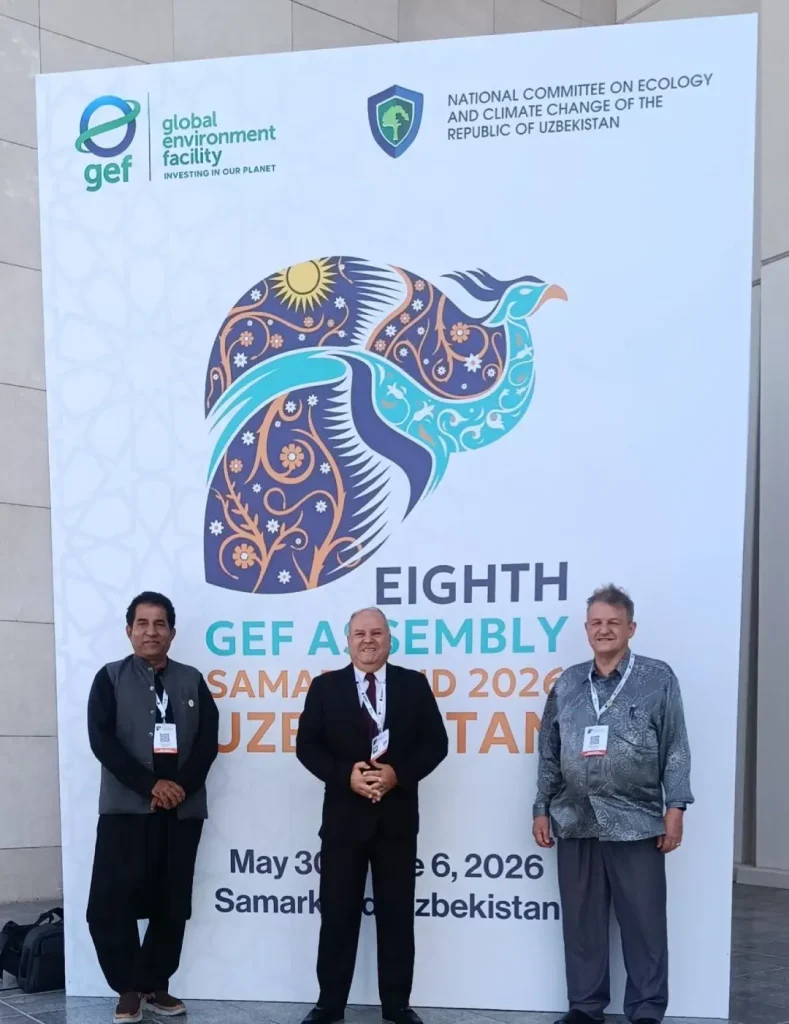

MAKES participates in GEF Eighth Assembly Samarkand 2026
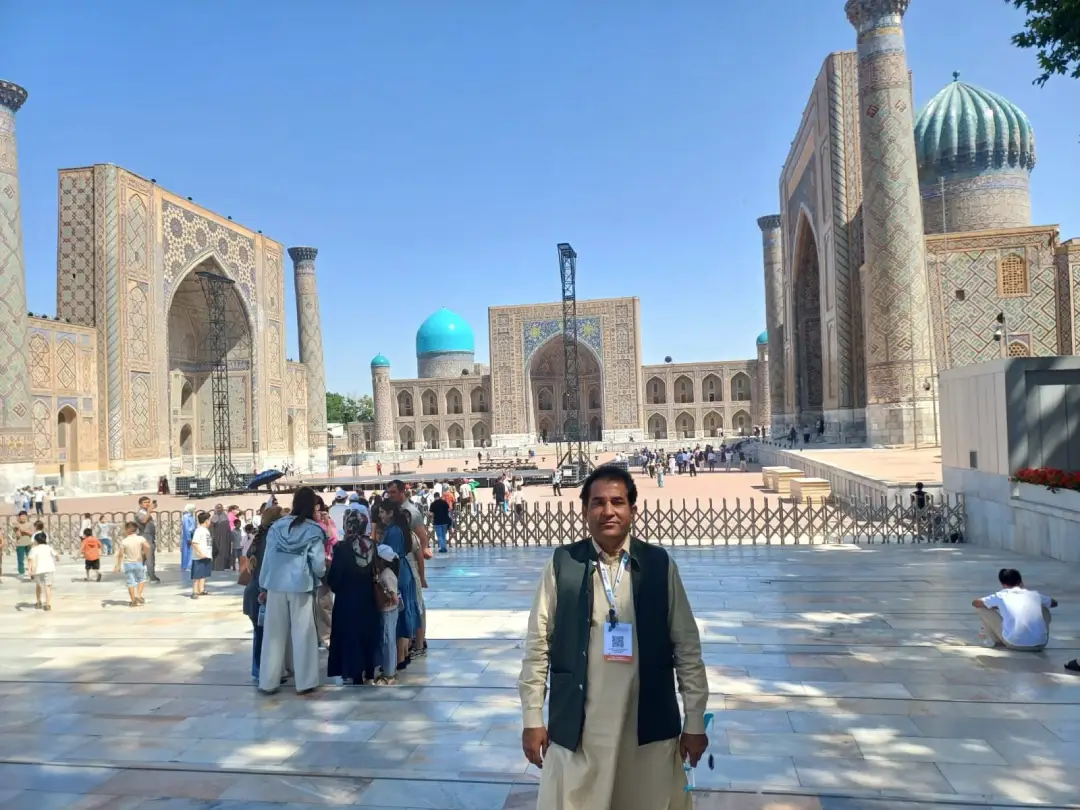
Samarkand, Uzbekistan (30 May – 6 June 2026). The GEF eighth assembly Samarkand gathered the global environmental community, convened by the Global Environment Facility, at the Silk Road Samarkand Congress Center, with the headline governance sessions convened on 4–5 June. Among the delegates was Muhammad Ameen Keryo, Director of MAKES Pakistan, who carried Pakistan’s voice on community-scale climate resilience and ecological sanitation into the discussions.
What the GEF eighth assembly Samarkand set out to achieve
Framed around “the final sprint to 2030,” the gathering pressed for faster, joined-up action across biodiversity, land restoration, oceans, pollution and blended finance. Delegates also welcomed the GEF-9 cycle covering 2026–2030 and a USD 3.9 billion replenishment earmarked for environmental projects worldwide. The recurring message from the closing session — that a healthy planet is what makes lasting development possible — anchored the week’s debates.
At a glance: hosted in Samarkand from 30 May to 6 June 2026 · main Assembly on 4–5 June · representatives of the GEF’s 186 participant countries · 2,000+ attendees from governments, UN bodies, civil society, Indigenous Peoples, women, youth and the private sector · GEF-9 and a USD 3.9 billion replenishment endorsed.
Who took part
Official reporting describes participation drawn from the GEF’s 186 member countries, spanning Africa, Asia and the Pacific, Europe and Central Asia, Latin America and the Caribbean, the Middle East and North America, with Uzbekistan serving as host. More than two thousand registered participants — ministers, agency representatives, researchers and community advocates — took part in the Assembly and its associated meetings.
Muhammad Ameen Keryo: bringing field-tested solutions to a global stage
At Samarkand, Keryo engaged with civil-society networks operating under the GEF partnership, contributing to exchanges on regional cooperation across South Asia and on embedding community-driven sustainability into environmental governance. His participation underlined a simple conviction shaped over more than a decade of fieldwork: durable environmental progress is built locally, then scaled.
Ecological wastewater treatment as a practical answer
Much of Keryo’s work centres on treating wastewater through living systems rather than energy-hungry machinery. Drawing on wetland vegetation, soil media and microbial activity, these nature-based solutions clean water through natural biological pathways — an affordable, low-energy route to sanitation for communities that conventional wastewater treatment infrastructure has not reached.
Pakistan’s pioneering constructed wetland
Keryo is recognised for building Pakistan’s first constructed wetland in village Majeed Keerio, demonstrating that ecosystem-based engineering can purify wastewater, curb pollution and open the door to water reuse. The project remains a reference point for regions seeking dependable treatment without the cost and complexity of conventional plants — and a working example of climate adaptation rooted in local capacity.
From a village pilot to a global conversation
Keryo’s presence at the GEF eighth assembly Samarkand threaded a clear line from one Sindh village to an international forum: that locally engineered, ecologically grounded solutions deserve a seat at the table where global environmental finance and policy are shaped. Under his direction, MAKES Pakistan continues to develop replicable models in sanitation, ecosystem restoration and climate resilience for communities across Pakistan and beyond.
Why the GEF eighth assembly Samarkand mattered for Pakistan
For a delegation focused on water and sanitation, the value of the Samarkand gathering lay in connection: linking a proven village-scale treatment model to the finance, partnerships and policy frameworks that can carry it further. Pakistan faces mounting pressure on freshwater, with untreated effluent contaminating rivers and groundwater that millions depend on. Solutions that are inexpensive to build, simple to maintain and powered by natural processes are exactly the kind of intervention the GEF partnership exists to scale.
By presenting field evidence rather than theory, MAKES Pakistan reinforced a message that ran through the week in Samarkand: the most durable environmental gains often begin in the places furthest from the conference hall. The exchanges at the assembly also opened doors for knowledge-sharing across South Asia, where similar water-quality and sanitation gaps persist.
Frequently asked questions
When and where was the GEF eighth assembly Samarkand held?
It ran from 30 May to 6 June 2026 at the Silk Road Samarkand Congress Center in Uzbekistan, with the main Assembly sessions on 4 and 5 June.
Who represented MAKES Pakistan?
Director Muhammad Ameen Keryo attended, contributing to civil-society discussions on climate resilience and ecological sanitation across South Asia.
What did the assembly decide?
Delegates welcomed the GEF-9 funding cycle for 2026–2030 and a USD 3.9 billion replenishment to support environmental action by the GEF’s 186 participant countries.
Explore the work behind the story
See how MAKES Pakistan applies constructed wetland systems and environmental services to turn wastewater challenges into community assets.